I, Fanzine

Kitchen Stories


Collective Élan

CareCureCards
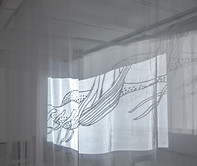
CareCureCards installation

Collective exhibition Entrelacs

Projet École

La Escuelita

Museo de América

Asociación Gradiva

Territory's poem


© Christoper Hayes
©Theactivistcurator
2025-2026 Kitchen STORIES, NEHAM LIBRARIES, LONDON
Kitchen Stories is a community-based research project that uses food and personal stories as a starting point to explore migration, belonging, care, and everyday cultural practices. Through a series of sessions held in libraries, younger participants explored these themes through visual languages and creative processes, using drawing as a way to express, interpret and share their own experiences, memories and imaginations.


©Theactivistcurator
2024, i fANZINE, Hypha Studios
Unit 3. Euston Tower. 286 Euston Road London NW1 3DP, LONDON, UK
I Fanzine took place in the exhibition ‘I, Present’. A group exhibition exploring climate emergency through the senses, sustainability, and action.
Using recycled paper and materials, participants were able to create and design their own fanzine while exploring the exhibition, not only through the senses but, also, through colours and shapes for example. They added their own responses and designs to the fanzine depending on their engagement with the artworks. It was a process of learning, discovery, and exploration.
Participants used their own voices to express themselves. The fanzines had a variety of themes, such as society, community, sea life, land, politics, climate, or animals.
2022, september. trigo limpio Artist residency.
territory's poem project. cantiveros, avila, spain.
Territory’s poem is a project carried out as part of Trigo Limpio's art residency organized by the collective Tela Marinera.
Territory's poem explored the trust within the group through the act of playing Collective poetry was used as a medium to map and discover the rural environment of the village of Cantiveros.


2019-2018 July, Artist residency in Crayons du Soleil and Montessori-Aquilae school, Geneva, Switzerland.
Collective Élan is a team of professional visual artists who share a passion for arts and pedagogy. As a collective, we are committed to developing learning tools that facilitate the holistic development of a children through engaged play.
The collective was born in Geneva in 2017.


©JeremySaâdi
2019 carecurecards installation
The projected roots were drawings of different rhizomatic plants. The film became a metaphor for the invisibility of care work.


2019-2017 Coproduction of CareCureCards.
Project co-designed with the artist KimyiBo. (MA Thesis supervisors: Olivier Desvoignes y Marianne Guarino-Huet) Geneva, Switzerland.
CareCureCards is a polyvalent instrument used as a discussion prompt, which reappropriates visual productions by feminist activists from the past and present, from different parts of the globe, as a tool for influencing artistic, educational, and political processes. CareCureCards consists of three parts: a deck of cards with images, a notebook, and a lexicon.
The deck of cards explores the concepts of “care” and “cure”. We wanted to elicit multiple definitions of care—nurturing, growth, burden, anguish, love, responsibility—through the images. The “Cure” in our name suggests that the conversations enabled through these gatherings can serve both as forms of self-care and collective healing.
These cards have two sides: on one side, there is a botanical illustration of plants; on the other, collages. The images of plants with rhizomatic structures evoke the ideas of care, cure, connection, continual growth, and strength. Different plants need different environments to thrive. Such environmental factors include sunlight, shade, moisture, differing air pressure, soil composition, and surrounding species that interact with the plant. We used this metaphor to define how we understand the concept of care.
On the flip side, the collages we created are based on political feminist posters or illustrations that address different forms of care work in different geographical locations and historical periods.
The original sources used for the collages are collected in the notebook, which people can consult to find out more about the work of the artists and activists, as well as the political movements related to care around the globe.
Another set of cards forms a lexicon that can be used during the discussion. The current lexicon contains keywords that summarise our research on care, and in the future, it could be recomposed to respond to the context in which the cards would be activated.


2016-2017 Artist residency La Escuelita-Onex. Geneva, Switzerland.
Creation and delivery of two workshops for children aged 7–12: Mi vestido cuelga ahí and Rostros que platican, focusing on the figure of Frida Kahlo, the concept of otherness, and Latin American culture.
2016 Internship Learning Department Museo de América. Madrid, Spain.
Projects co-developed and co-designed with Laura Jude, Azahara Asensio and Lorena Báez (a.k.a. SolitaVoy)
Intergenerational workshops, Maneras de ver el mundo, exploring non-Western cartographies. These workshops took place as part of the exhibition Pacífico y la aventura de la Mar del Sur. The project was inspired by one of the exhibition’s pieces: a Marshall Islands stick chart.
Co-creation of the Kamaní project (Proyecto Kamaní), an artist residency with contemporary artists.


2019 COLLECTIVE EXHIBITION ENTRELACS
Entrelacs was a collectively organised exhibition by students from the TRANS Master’s programme at Live In Your Head, the curatorial institute of HEAD – Geneva. The goal of the exhibition was to give form and space to practices that were shaped within the framework of socially engaged art throughout the Master’s programme.
2018-2017 Co-Production. Project École
This project was conducted with a class of 7P students (aged 10–11) at École Libellules. It was co-designed and co-developed with three other artists: KimyiBo, Laura Braillard, and Jeanne Martin-Taton.
Through the process of creating an imaginary playground, the students worked together to investigate how the architecture of the playground influences their daily activities within the space. The artists introduced the students to the work of artists and architects from around the globe, and the community imagined and constructed an alternative playground, opening up a universe of possible activities to animate the space.
Using a map of the school’s playground drawn by the artists as a tool for investigation, the students observed the space and created elements of a fictional playground through writing, collages, and drawings. Students and artists collectively designed posters and printed them using screen printing at the artists’ printmaking studio. The posters were installed by the students in different locations throughout the playground, in the presence of friends and family.
Through this project, students learned how to use art as a means of expressing their potential, as well as about the principles and practice of democratic participation.


2015-2016 Gradiva. Asociación de Jóvenes Historiadores del Arte. Madrid, Spain.
Project co-developed with Vanesa Peña, Pablo Tejedor and Daniel Valtueña. With the collaboration of Marta Martínez and Mónica Mediavilla.
Co-founder of Gradiva, Asociación de Jóvenes Historiadores del Arte. We invited lecturers, researchers, and contemporary artists to address topics that were neglected in our university syllabus, such as feminism, postcolonialism, and queer theory.